 (951) 902-3258

By Renato Romero Jr., J & R Elite Roofing
A well-placed skylight changes how a room feels. It eliminates the flat, artificial quality of a windowless interior and replaces it with daylight that shifts through the day. In the Inland Empire, where clear skies are the rule, skylight installation is one of the highest-return improvements you can make per dollar spent. Here's what you need to know: the types of skylights available, how the installation process works, what it costs in the Moreno Valley and Riverside market, and what maintenance looks like over time. For our service areas across the region, see our locations page.
What Types of Skylights Are Available for Inland Empire Homes?
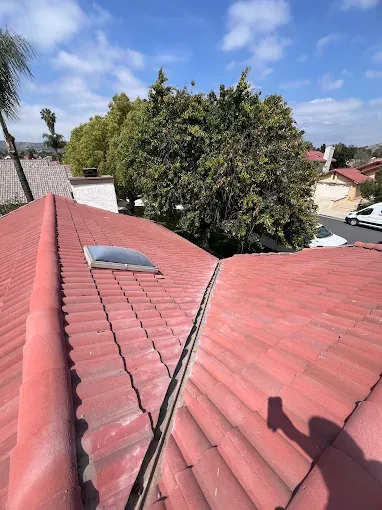
Skylight selection starts with understanding what each type actually does. Not just how it looks, but how it performs in the specific conditions of Southern California's climate.
What Is a Fixed Skylight and When Is It the Right Choice?
Fixed skylights are non-operable units: they admit light but don't open. Because there are no moving parts or seals that must function as a hinge, fixed skylights are the most weathertight option and typically carry the longest service life. They're the right choice for living rooms, hallways, stairwells, and any space where the goal is light rather than airflow. In the Inland Empire's largely dry climate, where ventilation through skylights isn't usually a primary concern, fixed units handle the majority of residential installations.
What Are Vented Skylights and Where Do They Work Best?
Vented (operable) skylights can be opened manually or via remote control motor, allowing hot air to escape through the roof. That's the natural convection path that stack-effect ventilation follows. In kitchens, bathrooms, and laundry rooms where humidity and heat build up, a vented skylight provides both light and passive cooling. The trade-off is higher initial cost and more maintenance: the hinges, seals, and motor (if motorized) require periodic attention. After any Santa Ana wind event, a quick check of the seal is worth the 60 seconds it takes.
How Do Tubular Skylights Work in Tight Spaces?
Tubular skylights, also called sun tunnels or solar tubes, use a small roof-mounted dome to capture sunlight and channel it through a reflective tube into the interior. The tube can run through attic space and around obstructions, making tubular units viable in rooms that could never accommodate a traditional curb-mounted skylight: interior bathrooms, walk-in closets, hallways under a second floor. The output is diffused, even light without the dramatic shaft that a large fixed skylight creates. Installation is faster and less invasive than traditional skylights, typically half a day versus one to two days.
How Much Does Skylight Installation Cost in the Inland Empire?
| Skylight Type | Unit Cost (Installed) | Typical Duration | Best Application |
|---|---|---|---|
| Fixed skylight (standard) | $900–$2,200 | 1 day | Living rooms, halls, stairwells |
| Vented skylight (manual) | $1,200–$2,800 | 1 day | Kitchens, bathrooms |
| Vented skylight (motorized) | $1,800–$3,500 | 1–1.5 days | High or hard-to-reach locations |
| Tubular skylight (10") | $600–$1,200 | Half day | Closets, hallways, powder rooms |
| Tubular skylight (14") | $800–$1,500 | Half day | Medium rooms, interior baths |
What Factors Drive Skylight Installation Price Up or Down?
- Roof pitch: Steeper pitches require additional safety rigging and slow installation. Any pitch above 6:12 typically carries a 15–25% labor premium.
- Roof material: Cutting into tile roofs requires more careful work to avoid cracking adjacent tiles and matching the surrounding surface. Tile adds 1–3 hours of labor versus composition shingle.
- Curb vs. deck-mounted: Curb-mounted skylights (raised frame) are easier to flash properly and more water-resistant on lower-slope applications; deck-mounted units sit flush and cost slightly less but require careful flashing on pitches below 4:12.
- Shaft construction: If the attic space requires building a drywall light shaft to channel light from the roof opening down to the ceiling, add $400–$1,200 for framing and finishing work.
- Glazing upgrade: Standard clear glass is the baseline. Low-E coated glass (recommended for Southern California to limit heat gain) adds $100–$300 per unit.
Are Financing Options Available for Skylight Projects?
J&R Elite Roofing offers financing for qualified homeowners, allowing skylight installation costs to be spread over 12–60 months. For larger projects that include skylight installation as part of a broader re-roofing or home improvement scope, financing can consolidate the entire project into a single monthly payment. To discuss options, contact us for a free estimate and financing review.
What Does the Skylight Installation Process Look Like?
How Is the Right Location for a Skylight Determined?
Location selection is the most consequential decision in a skylight project. The ideal placement balances light quality, structural constraints, and energy performance. North-facing skylights provide consistent, diffused light without direct sun glare, preferred for art studios and home offices. South-facing skylights deliver the most solar heat gain, useful in winter but potentially problematic in Inland Empire summers without Low-E glazing. East and west orientations bring morning and afternoon direct sun respectively, creating dramatic but hot light in summer. Your contractor should assess rafter spacing, attic depth, and any HVAC or electrical obstructions before recommending placement.
What Happens During the Installation Itself?
- Structural assessment: Rafters around the target location are inspected. If the skylight span crosses a rafter, headers are installed to maintain structural integrity.
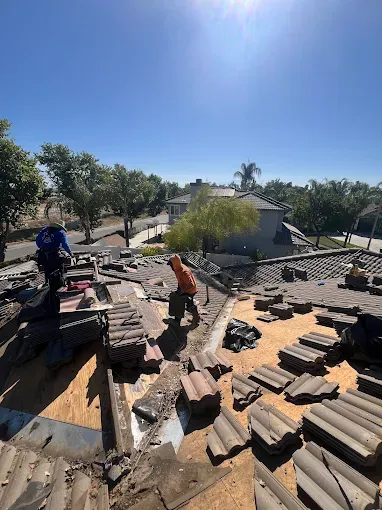
- Roof opening: Roofing material is carefully removed and the decking is cut to the skylight's rough opening dimension.
- Curb construction: A raised curb (typically 4" above the deck) is framed and sheathed to provide a mounting surface for the unit.
- Skylight placement and fastening: The unit is set, leveled, and secured to the curb.
- Step flashing and counterflashing: Interlocking metal flashings are woven into the surrounding roof material to direct water away from the opening. This is the most leak-critical phase of the work.
- Interior shaft: If needed, the light shaft is framed, drywalled, and finished to match the ceiling. White-painted shafts maximize light diffusion.
- Final inspection: The installation is inspected from both roof and interior. Water testing (hosing around the unit) confirms the watertight seal before completion.
Is a Permit Required for Skylight Installation in Riverside County?
In most Riverside County jurisdictions, including Riverside, Moreno Valley, Norco, and Corona, a building permit is required for skylight installation because it involves structural modification of the roof deck. Tubular skylights under a certain size may qualify for an exemption in some cities; your contractor can confirm. J&R handles permit procurement as part of the installation scope.
How Does Skylight Installation Affect Energy Performance in the Inland Empire?
What Energy Savings Can a Skylight Provide?
A properly specified skylight reduces daytime electric lighting consumption in the rooms it serves. In well-positioned rooms, you can go through the entire daylight period without switching on overhead lights. That's a meaningful reduction for a household that otherwise runs lights during the long Southern California days. Studies consistently show 20–30% reductions in lighting-related electricity use in skylit spaces. The key qualifier is "properly specified." A clear-glass south-facing skylight in Moreno Valley without a shade system will add more to your cooling costs than it saves in lighting, particularly in July and August.
Which Glazing Options Perform Best in Southern California's Heat?
For the Inland Empire, the recommended specification is a double-pane unit with a Low-E coating and a Solar Heat Gain Coefficient (SHGC) of 0.25–0.35. This blocks the majority of infrared heat while allowing visible light through. Velux, FAKRO, and Sun-Tek all offer qualifying glazing configurations. The California Energy Commission's Title 24 requirements establish minimum SHGC thresholds for residential skylights; a licensed contractor will ensure the specified unit meets or exceeds those requirements.
What Skylight Repair and Maintenance Services Does J&R Provide?
What Are the Most Common Skylight Problems and Their Causes?
The most common skylight failure is leaking at the flashing, not through the glazing itself. Water intrusion typically originates at the intersection of the curb and the surrounding roofing material, particularly after thermal movement loosens the sealant or debris accumulates in the step-flashing channels. Other common issues include:
- Condensation between panes: Indicates a failed seal on the insulated glazing unit. The glass must be replaced; the unit itself is often still structurally sound.
- Cracked or yellowed acrylic domes: Common on older bubble-style skylights installed before the current generation of glass units. Replacement with a glass unit typically improves both appearance and energy performance.
- Motor failure on motorized units: Usually a wiring or actuator issue, repairable without replacing the entire skylight.
How Often Should Skylights Be Inspected?
Annual inspection is the professional standard. Spring is ideal, after winter rain and before summer heat loads begin. After any Santa Ana wind event with sustained gusts above 60 mph, a visual inspection of the flashing is prudent. J&R provides skylight inspection as part of its broader roof maintenance and inspection services. For active leaks or post-storm damage, emergency roof repair services are available around the clock.
Why Choose J&R Elite Roofing for Skylight Installation in the Inland Empire?
What Experience Does J&R Have with Skylight Projects?
J&R Elite Roofing has completed skylight installations across Moreno Valley, Riverside, and San Bernardino, in tile, composition shingle, and flat roofing systems. Every project includes structural assessment, permit procurement, manufacturer-compliant flashing, and a post-installation water test. J&R's installations carry a workmanship warranty and documentation for permit records. For residential roofing projects that incorporate skylight work alongside re-roofing, J&R coordinates both scopes under a single project timeline. To get started, contact us for a free estimate.
Interested in Adding a Skylight?
Most skylight projects come together faster than people expect. A quick site visit lets us confirm the right location, the right type, and what the permit process looks like for your city. J&R Elite Roofing installs skylights across Moreno Valley, Riverside, San Bernardino, and the surrounding Inland Empire.