 (951) 902-3258

By Renato Romero Jr., J & R Elite Roofing
The roofing decision you're facing in Southern California is different from most of the country. The heat isn't just uncomfortable, it's destructive. Inland Empire temperatures routinely exceed 105°F in summer, UV index runs high year-round, and Santa Ana wind events test every fastener and seam. In that environment, the choice between metal roofing and asphalt shingles has real consequences for your energy bills, maintenance costs, and how long the roof lasts before it needs replacing. Here's a direct, practical comparison to help you make that call. For residential roofing specific to your home, see residential roofing options.
What Are the Key Benefits of Metal Roofing in Southern California?
Metal roofing's advantages in the SoCal climate center on three things: reflectivity, durability, and longevity. In a region where the sun is the primary adversary of roofing materials, those three qualities matter more than they would in a cooler, cloudier market.
How Does Metal Roofing Improve Energy Efficiency in Hot Climates?
Metal roofs with cool-roof coatings reflect 65–90% of solar radiation, compared to 5–25% for standard asphalt shingles. That reflectivity keeps attic temperatures 20–40°F lower on peak summer days, which directly reduces the load on your air conditioning system. If you're in Riverside or Moreno Valley, you'll typically see 20–30% reductions in cooling costs after switching from asphalt to a properly specified metal system. Over a 10-year ownership period in a climate where summer cooling bills regularly exceed $300/month, those savings add up. J&R Elite Roofing specializes in roofing options for both residential and commercial properties.
What Makes Metal Roofs Durable Against SoCal Heat and Weather?
Asphalt shingles in the Inland Empire degrade faster than manufacturer ratings suggest because those ratings assume moderate climates. UV exposure accelerates granule loss. Thermal cycling, expanding and contracting 40–60 times per year as temperatures swing, loosens adhesive strips and fasteners. Metal roofing handles thermal movement through designed expansion gaps and concealed fasteners. Steel and aluminum don't lose material over time the way asphalt does. They maintain structural integrity through the same heat cycles that gradually destroy shingle-based systems.
How Do Asphalt Shingles Perform in Southern California's Heat?
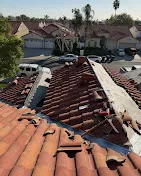
Asphalt shingles are the most common roofing material in the U.S. for a reason: they're affordable, widely available, and perform acceptably across a broad range of climates. In Southern California's heat, "acceptably" is the operative word.
What Is the Typical Lifespan and Durability of Asphalt Shingles in SoCal?
Asphalt shingles carry 25–30 year manufacturer warranties, but in the Inland Empire's climate, functional lifespan more commonly runs 15–20 years. The heat-driven granule loss that telegraphs shingle failure accelerates dramatically above 90°F, and Riverside sees 80+ days per year above that threshold. If you plan to stay in your home long-term, factor in the probability of one full replacement cycle within a 30-year ownership period. For commercial properties requiring robust solutions, commercial roofing services cover all material types.
How Have Advances Improved Asphalt Shingles' Heat Resistance?
Modern architectural shingles are meaningfully better than the three-tab shingles of 20 years ago. Impact-resistant (IR) Class 4 shingles withstand hail better and include fiberglass mat reinforcement that resists thermal cracking. Algae-resistant granule treatments extend appearance life. These improvements close some of the gap with metal roofing, but they don't eliminate it. The fundamental heat absorption and granule loss mechanisms remain.
What Are the Cost Differences Between Metal Roofing and Asphalt Shingles?
| Factor | Metal Roofing | Asphalt Shingles |
|---|---|---|
| Installation cost / sq ft | $7–$14 | $4–$7 |
| Expected lifespan (SoCal) | 40–70 years | 15–20 years |
| Annual maintenance cost | $200–$500 | $300–$800 |
| Energy savings (cooling) | 20–30% | 0–5% |
| End-of-life recyclability | 100% recyclable | Limited |
How Does Installation Cost Compare for Metal Roofs vs Shingles?
On a 2,000 sq ft roof, metal roofing typically runs $14,000–$28,000 installed versus $8,000–$14,000 for architectural asphalt shingles. The premium is real, roughly $6,000–$14,000 depending on metal type and complexity. That premium is recovered over time through lower maintenance costs, energy savings, and skipping the replacement cycle that shingles require at the 15–20 year mark. For urgent repairs on any system, roof repairs and emergency services are available around the clock.
What Is the Return on Investment Considering Energy Savings and Maintenance?
The typical payback horizon for the metal roofing premium, accounting for energy savings and avoided replacement costs, runs 12–18 years in the Inland Empire. If you plan to own your property for 20+ years, you'll almost always find metal roofing to be the better financial decision when total cost of ownership is calculated over that window.
How Should You Maintain Metal and Shingle Roofs in SoCal Heat?
What Are Common Maintenance Needs for Metal Roofs in Southern California?
Metal roofs are low-maintenance by design. Annual tasks: inspect fasteners and sealants at all penetrations (the most common leak source on any roof), clear debris from valleys and gutters, and check for any rust at cut edges or abraded sections. After Santa Ana wind events, a visual inspection for shifted panels or damaged flashing is the smart move. Explore locations to find expert help near you.
How Does Heat Affect Asphalt Shingle Maintenance and Repair?
High heat makes asphalt shingles brittle at the granule layer and softens the adhesive strips that seal shingles against wind uplift. If you have a shingle roof, inspect for curling, cracking, or granule accumulation in gutters after each summer season. Catch these early and address them with spot repairs. You can often extend the roof's life another 3–5 years before a full replacement becomes necessary.
What Environmental Impacts and Sustainability Factors Affect Roofing Choices?
How Do Metal Roofs Contribute to Sustainable Building Practices?
Metal roofing is among the most sustainable roofing choices available. Most steel and aluminum panels contain 25–90% recycled content, and the material is 100% recyclable at end of life. Combined with the energy efficiency benefits during the roof's active service life, metal roofing consistently achieves LEED contribution credits for residential and commercial projects seeking green building certification.
Are Asphalt Shingles Environmentally Friendly for SoCal Homes?
Traditional asphalt shingles present two environmental challenges: they're petroleum-derived, and the vast majority end up in landfills at end of life. Shingle recycling programs exist in California but aren't yet broadly accessible in most Inland Empire communities. Manufacturers are developing bio-based and recycled-content shingle products, but these are still a small fraction of the market.
What Is the Installation Process and Timeline for Metal vs Shingle Roofs?
How Long Does Metal Roof Installation Take in Southern California?
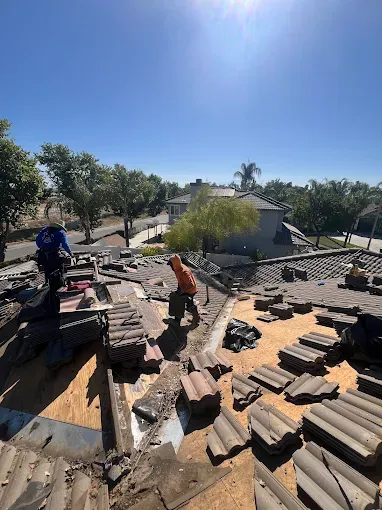
A typical residential metal roof installation on an average Inland Empire home takes 3–7 days for standing seam and 2–4 days for corrugated or exposed-fastener systems. Complex roofs with multiple slopes, dormers, or skylights take longer. Weather is less of a scheduling constraint than it is for shingle installation, since metal panel work can continue in moderate conditions. Regular roof maintenance and inspections after installation keep the system performing at its best.
What Are the Steps for Asphalt Shingle Roof Installation?
Shingle installation is faster. Most residential re-roofing jobs are complete in 1–3 days. The process: tear-off of old shingles (if applicable), deck inspection and repair, underlayment installation, then shingle application from eaves to ridge. The shorter timeline makes scheduling easier and reduces disruption to your household, which is a genuine advantage if installation convenience is a priority. Questions about which system fits your home? Contact us for a free consultation.
Not Sure Which Direction to Go?
The right call depends on your budget, how long you plan to stay in the home, and what your roof looks like right now. We're happy to walk you through both options on-site so you can make the decision with actual numbers in front of you, not just ranges from the internet. J&R Elite Roofing serves Moreno Valley, Riverside, San Bernardino, and the surrounding Inland Empire.